
Dell PowerEdge R250 Server
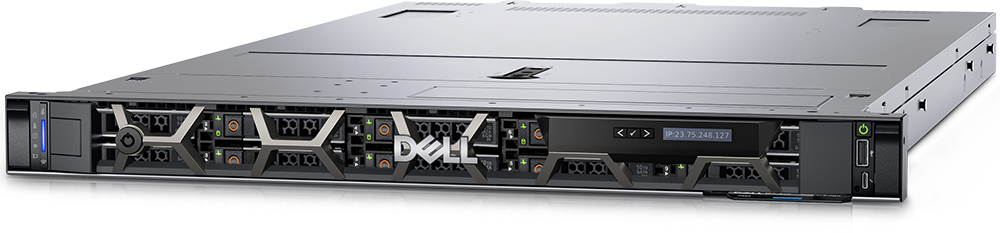
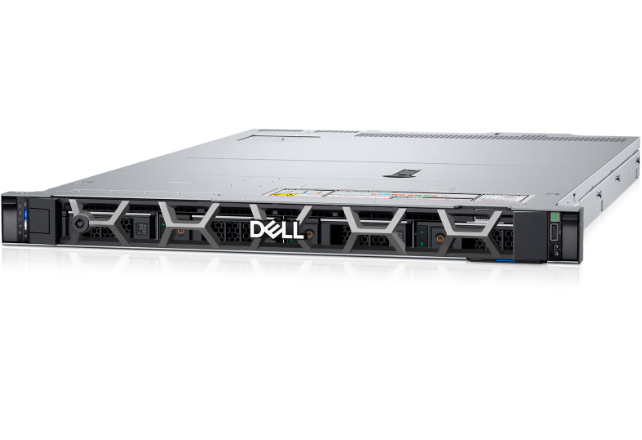
At Cloud Ninjas we offer the opportunity of you configuring the Dell PowerEdge R250, with a catalog of different possible chassis and the best prices so you can upgrade your business at the best price for performance. With single Intel Xeon E-2300 socket and 4 memory modules possible, the R250 offers great performance for small size businesses who want to put a foot in the door in local storage and management. The R250 shows the heavy improvement over the last generation Dell PowerEdge R240 14th Gen server.
- 1U Rackmount
- Entry Level
- Intel Xeon E-2300
- Application & Software

Configure your Dell PowerEdge R250 Server
Dell PowerEdge R250 Server Specifications
Cloud Ninjas' Dell PowerEdge R250 Specifications
Chassis
The Dell PowerEdge R250 server is a 1U server that is great for computation applications. This 15th generation Dell server builds upon the R240. There are a few different chassis options for the PowerEdge R250. We will cover some of differences and similarities of the different chassis options.
Bay Counts
There are only two bay count options for the PowerEdge R250 which are 2 Bay LFF and 4 Bay LFF. The 2 Bay LFF only comes in a cabled SAS/SATA drive version. This chassis accepts a total of two 3.5” SAS/SATA drives. The 4 Bay LFF chassis has both a cabled SAS/SATA drive and hot-swap drive SAS/SATA version. This chassis accepts up to four SAS/SATA drives.
Chassis Rear and PCIe Slots
The chassis rear is the same across all R620 chassis. The chassis rear has two PCIe slots which are both low-profile. The rear includes a serial connector, VGA port, two RJ45 Ethernet ports, a dedicated RJ45 iDRAC port, a USB 2.0 port, a USB 3.2 Gen 1 port, a system ID button, a CMA jack, and a cabled power supply.
Processing Power
The Dell PowerEdge R250 server has one CPU socket. This socket accepts Intel Xeon E-2300 processors with up to 8 cores. Intel Pentium processors up to 2 cores are also supported.
Intel Xeon E-2300
| CPU | Cores | Frequency | Cache |
|---|---|---|---|
| E-2314 | 4 | 2.80 GHz | 8 MB |
| E-2324G | 4 | 3.10 GHz | 8 MB |
| E-2334 | 4 | 3.40 GHz | 8 MB |
| E-2336 | 6 | 2.90 GHz | 12 MB |
| E-2356 | 6 | 3.20 GHz | 12 MB |
| E-2374G | 4 | 3.70 GHz | 8 MB |
| E-2378 | 8 | 2.60 GHz | 16 MB |
| E-2378G | 8 | 2.80 GHz | 16 MB |
| E-2386G | 6 | 3.50 GHz | 12 MB |
| E-2388G | 8 | 3.20 GHz | 16 MB |
Intel Pentium
| CPU | Cores | Frequency | Cache |
|---|---|---|---|
| G7400 | 2 | 3.70 GHz | 6 MB |
| G7400T | 2 | 3.10 GHz | 6 MB |
| G7400TE | 2 | 3.00 GHz | 6 MB |
| G7400E | 2 | 3.60 GHz | 6 MB |
| G6405T | 2 | 3.50 GHz | 4 MB |
| G6405 | 2 | 4.10 GHz | 4 MB |
| G6505 | 2 | 4.20 GHz | 4 MB |
| G6505T | 2 | 3.60 GHz | 4 MB |
| G6605 | 2 | 4.30 GHz | 4 MB |
| 6500Y | 2 | 3.40 GHz | 4 MB |
| 7505 | 2 | 3.50 GHz | 4 MB |
| G6400TE | 2 | 3.20 GHz | 4 MB |
| G6400E | 2 | 3.80 GHz | 4 MB |
| G6400T | 2 | 3.40 GHz | 4 MB |
| G6400 | 2 | 4.00 GHz | 4 MB |
| G6500 | 2 | 4.10 GHz | 4 MB |
| G6500T | 2 | 3.50 GHz | 4 MB |
| G6600 | 2 | 4.20 GHz | 4 MB |
| G6405U | 2 | 2.40 GHz | 4 MB |
| G5600T | 2 | 3.30 GHz | 4 MB |
| G5420T | 2 | 3.20 GHz | 4 MB |
| G5420 | 2 | 3.80 GHz | 4 MB |
| G5620 | 2 | 4.00 GHz | 4 MB |
| 4417U | 2 | 2.30 GHz | 2 MB |
| 4425Y | 2 | 1.70 GHz | 2 MB |
| 5405U | 2 | 2.30 GHz | 2 MB |
| G5400 | 2 | 3.70 GHz | 4 MB |
| G5400T | 2 | 3.10 GHz | 4 MB |
| 4415Y | 2 | 1.60 GHz | 2 MB |
| 4415U | 2 | 2.30 GHz | 2 MB |
| 4410Y | 2 | 1.50 GHz | 2 MB |
Memory
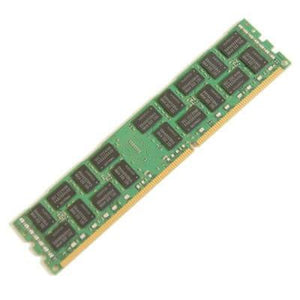
The Dell PowerEdge R250 server has a total of 4 DDR4 DIMM slots. There are two memory channels that each consist of two DIMM slots. Only one type of memory can be used with the R250 which is Non-ECC Unbuffered (UDIMMs). Module capacities of 8GB, 16GB, and 32GB are supported by the R250. The greatest possible configuration you can achieve with this system is 128GB with 4x32GB UDIMMs. The PowerEdge R250 can accept memory speeds of 2666MT/s, 2933MT/s, or 3200MT/s. The processor installed in your system will determine the maximum memory speed that your system can achieve. If using an Intel Pentium processor, the maximum memory speed is 2666MT/s. The highest possible memory speed that can be achieved by the R250 is 3200MT/s. If you install a processor that supports a lower maximum memory speed, and you install modules with higher speeds than the max, the speed of the module will clock down to the max speed. For example, if your processor supports a max RAM speed of 2666MT/s, and you install a 2933MT/s or 3200MT/s module, the module will operate at 2666MT/s.
Storage
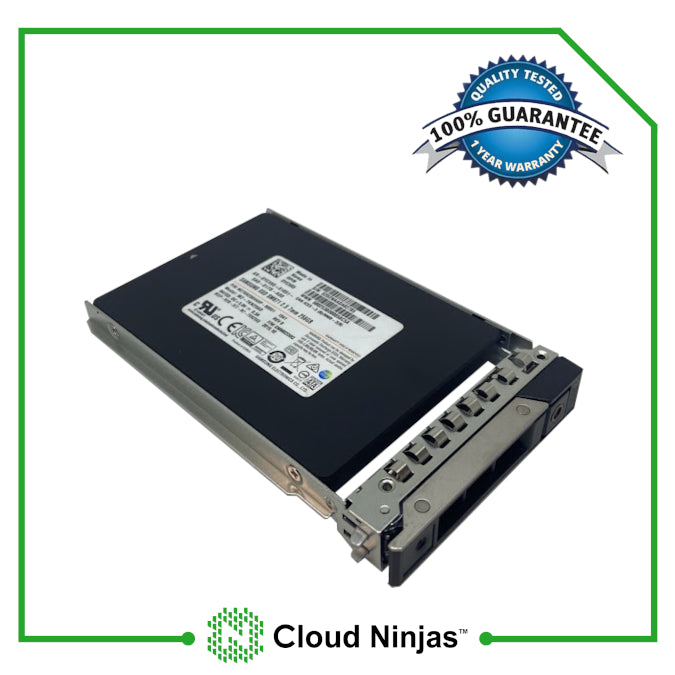
The Dell PowerEdge R250 server has a handful of different storage options. All chassis for the R250 have 3.5” drives bay, but 2.5” drives can still be installed using a 2.5” to 3.5” drive adapter. The R250 the use of HDDs, SSDs, and M.2s. Supported drive interfaces are SATA and SAS.
Supported Drives
| Form Factor | Type | Speed | Rotational Speed | Max Capacity Per Drive |
|---|---|---|---|---|
| 3.5" | SATA | 6 Gb | 7.2 K | 20 TB |
| 3.5" | SAS | 12 Gb | 7.2 K | 20 TB |
| 2.5" | SATA | 6 Gb | SSD | 3.84 TB |
| 2.5" | SAS/vSAS | 12 Gb | SSD | 7.68 TB |
| 2.5" | SAS | 12 Gb | 10K | 2.4 TB |
| 2.5" | SAS | 12 Gb | 15K | 900 GB |
| M.2 | SATA | 6 Gb | SSD | 480GB |
NVMe Options & Upgrades
A lot of the servers in Dell’s 15th generation of servers have loads of NVMe. If you are looking for a system with loads of NVMe support, then the R250 is not a good fit. The R250 does not have any NVMe support. This does not mean it’s a bad server overall. It all depends on you application, and what is right for you. PowerEdge R250 does not have an NVMe capable backplane, so you cannot use NVMe U.2 drives. M.2 drives can be install with a BOSS-S1 card, however, NVMe M.2 drives are not supported.
Power Supplies
The PowerEdge R250 supports one cabled power supply. There is not an option to use hot-swap power supplies. There is a total of two power supply options to choose from. The first option is 450W Bronze 100-240 VAC. The second option is 450W Platinum 100-240VAC. Both options are cabled, are 450W, and support a voltage range of 100-240VAC. The only difference is the efficiency rating. Platinum rated power supply is more efficient at high loads when compared to the bronze rated PSU.
RAID Options
The PowerEdge R250 has a variety of storage controllers to pick from. There are both RAID (PERC) and non-RAID options. Both of these types of storage controllers are good options, but the one that is best for you depends on your use case. You can also use a software RAID. Non-RAID adapters can’t be used to configure RAID, but they can be used as a boot or data controller. PERC RAID controllers do have the ability to configure RAID. A software RAID does the same thing, but it is limited compared to a hardware RAID.
| RAID Options | RAID Levels | Cache | Drive Speeds | PCIe Generation | RAID Hardware |
|---|---|---|---|---|---|
| S150 onboard software | 0,1,5,10 | None | 6 Gb/s SATA | PCIe | Software |
| HBA355E | Passthrough | None | 3 Gb/s SAS/SATA 6 Gb/s SAS/SATA 12 Gb/s SAS |
PCIe 4.0 | Hardware |
| HBA355i | Passthrough | None | 3 Gb/s SAS/SATA 6 Gb/s SAS/SATA 12 Gb/s SAS |
PCIe 4.0 | Hardware |
| H345 | 0,1,10 | None | 3 Gb/s SAS/SATA 6 Gb/s SATA 12 Gb/s SAS |
PCIe 3.0 | Hardware |
| H355 | 0,1,10 | None | 6 Gb/s SATA 12 Gb/s SAS |
PCIe 4.0 | Hardware |
| H755 | 0,1,5,6,10,50,60 | 8GB NV | Gen4 (16 GT/s) NVMe Gen3 (8 GT/s) NVMe 3 Gb/s SAS/SATA 6 Gb/s SAS/SATA 12 Gb/s SAS |
PCIe 4.0 | Hardware |
Network Interface Card Options
In order to connect a device to the internet, it needs some type of networking card. Networking cards can manifest as a port that is integrated on the motherboard, or as a separate card. The PowerEdge R250 has no option to add in an OCP card, but they can accept PCIe network cards. PCIe cards must be low-profile in order to install it into the R250. The R250 has two 1GbE RJ45 ports built into the motherboard.
Systems Management Solutions
The PowerEdge R250 has a wide variety of System Management tools. These tools include, but are not limited to:
- ⦿ Integrated Dell Remote Access Controller (iDRAC 9)
- ⦿ iDRAC Service Module (iSM)
- ⦿ OpenManage Ansible Modules
- ⦿ OpenManage Essentials (OME)
- ⦿ OpenManage Mobile (OMM)
- ⦿ OpenManage Integration for VMware vCenter (OMIVV)
- ⦿ OpenManage Integration for Microsoft System Center (OMIMSSC)
- ⦿ Dell EMC Repository Manager (DRM)
- ⦿ Dell EMC System Update (DSU)
- ⦿ Dell EMC Platform Specific Bootable ISO (PSBI)
- ⦿ Dell EMC Chassis Management Controller (CMC)
- ⦿ OpenManage Connections for Partner Consoles
- ⦿ OpenManage Enterprise Power Manager
- ⦿ OpenManage Integration with ServiceNow (OMISNOW)
Supported Operating Systems:
The Dell PowerEdge R250 has many operating systems choices. These operating systems range from different distributions of Linux and different versions of VMware and ESXi and Windows Server. The Dell PowerEdge R250 has many operating systems choices. These operating systems range from different distributions of Linux and different versions of VMware and ESXi and Windows Server.
- ⦿ Red Hat Enterprise Linux 8
- ⦿ Red Hat Enterprise Linux 9
- ⦿ SuSE Linux ES 15
- ⦿ Ubuntu Server 20.04 LTS
- ⦿ VMware ESXi 7.0
- ⦿ VMware ESXi 8.0
- ⦿ Window Server 2019 LTSC
- ⦿ Window Server 2022 LTSC
Technical Information
Technical Information Overview
The Dell PowerEdge R250 is a powerful 1U rackmount server, that can handle almost anything that comes it's way. It is loaded with features that can take the system to new heights. Learning about these features is the best thing you can do to fully take advantage of the perks of the R250. We have compiled a few guides that are useful for learning the ins and outs of the Dell PowerEdge R250 server.
Technical Guide
Learn the ins and outs of the R250: View PowerEdge R250 Technical Guide
Specification Sheet
A quick run down of the R250's Specifications View PowerEdge R250 Spec Sheet
Installation and Service Manual
Need help installing/replacing components or with using diagnostic's tools? The Installation and Service Manual is a fantastic resource: View PowerEdge R250 Installation and Service Manual
Integrated Dell Remote Access Controller 9 User's Guide
Everything you need to know about iDRAC9, all in one place: View PowerEdge R250 iDRAC9 User's Guide
Lifecycle Controller User's Guide
Navigate Lifecycle Controller with the Lifecycle Controller User's Guide: View PowerEdge R250 Lifecycle Controller Setup Guide
Dell Systems Management Overview
Learn about the R250's System Management Technologies: View PowerEdge R250 Dell Systems Management Overview Guide
BIOS Upgrade EFI File Download
Upgrade the BIOS Via an EFI File: Download PowerEdge R250 BIOS Upgrade EFI File
Cloud Ninjas Systems Videos
- CPUs
- Memory
- Drives
- NVMe
- Different Chassis Types
- RAID
- BIOS
- iDRAC
- Mass Updates
- How to set IP Address
- How to install VMware ESXI 7.0.3
- Network Cards
- Power Supplies
- How to Rack
- How to Install Windows Server 2016
CPUs
Coming Soon
Memory
Coming Soon
Drives
Coming Soon
NVMe
Coming Soon
Different Chassis Types
Coming Soon
RAID
Coming Soon
BIOS
Coming Soon
iDRAC
Coming Soon
Mass Updates
Coming Soon
How to set IP Address
Coming Soon
How to install VMware ESXI 7.0.3
Coming Soon
Network Cards
Coming Soon
Power Supplies
Coming Soon
How to Rack
Coming Soon
How to Install Windows Server 2016
Coming Soon
Customer's Comments and Reviews
- Choosing a selection results in a full page refresh.
- Press the space key then arrow keys to make a selection.