
Dell PowerEdge R740 Server
At Cloud Ninjas we offer the opportunity of you configuring the Dell PowerEdge R740, with a catalog of different possible chassis and the best prices so you can upgrade your business at the best price for performance. With dual Intel Xeon Gen1 & Gen2 scalable CPUs and 24 memory modules possible, the R740 is a 2U powerhouse and some of the most used servers in the market due to its performance, scalability, and overall and overall usage capabilities. The Dell PowerEdge R740 is the server that allows companies to use high computation, heavy database tasks, hyperconverged infrastructure, among other heavy workloads for any sized company.
- 2U Rackmount
- Enterprise Powerhouse
- Intel Xeon 1st & 2nd Gen Scalable
- AI Ready Platform

Configure your Dell PowerEdge R740 Server
Dell PowerEdge R740 Server Specifications
Cloud Ninjas' Dell PowerEdge R740 Specifications
Chassis
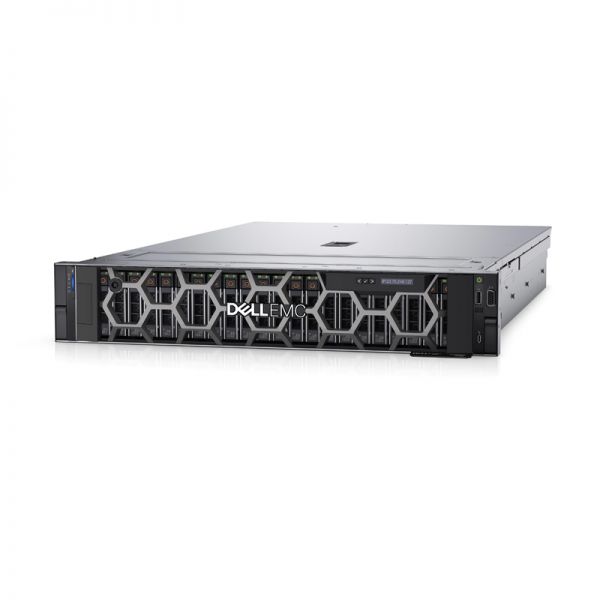
The Dell PowerEdge R740 is a more than capable storage solutions that is perfect for all sorts of businesses. There is a total of three different chassis options for the Dell PowerEdge R740 rackmount server. These options are 8 Bay SFF, 8 Bay LFF, and 16 Bay SFF. The main differences between each chassis have to do with their bay counts, form factor, and PCIe slots.
8 Bay SFF
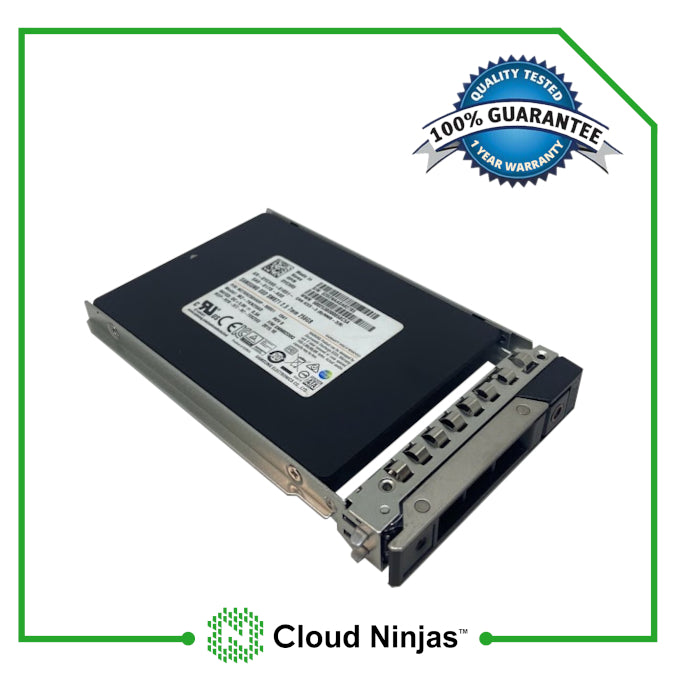
The 8 Bay SFF chassis has eight 2.5" drive bays on the front of the chassis. There is support for up to eight hot-swap 2.5" SAS/SATA hard drives and/or solid-state drives.
8 Bay LFF
The 8 Bay LFF chassis can accept up to eight 3.5" SAS/SATA drives. 2.5" hard drives and solid state drives can be used via a 2.5" to 3.5" drive converter.
16 Bay SFF
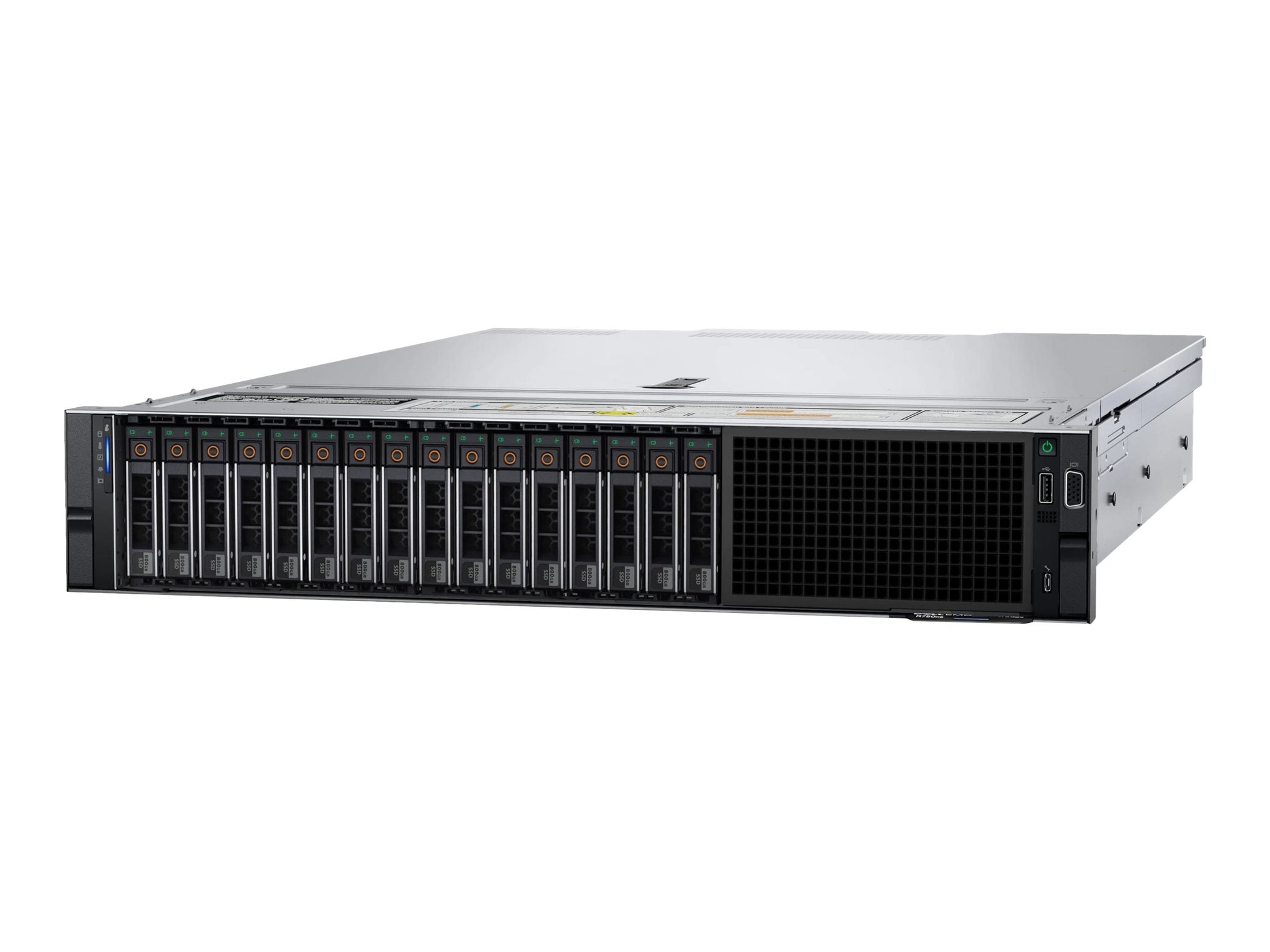
The 16 Bay SFF is equipped with sixteen 2.5 front drive bays. Up to sixteen 2.5" hot-swap SAS/SATA drives can be installed.
Rear Configurations
There is a total of two possible rear configurations for the Dell PowerEdge R740 server. Both rear configurations are nearly identical, other than the fact that they have different numbers of PCIe slots. The first configuration has one low-profile and three full-height PCIe slots while the second configuration has one low-profile and seven full-height PCIe slots. Both rear configurations include a dedicated iDRAC LAN port, a serial management port, a VGA port, two type A USB 3.0 ports, a network daughter card slot, and two hot-swap power supply bays.
Processing Power
The Dell PowerEdge R740 server can accept up to 1st Generation and 2nd Generation Intel Xeon Scalable processors. Total of 56 cores with a total of 28 cores per processor.
1st Generation Intel Xeon Scalable
| CPU | Step Code | Cores | Frequency |
|---|---|---|---|
| Bronze 3104 | SR3GM | 6 | 1.7GHz |
| Bronze 3106 | SR3GL | 8 | 1.7GHz |
| Silver 4106H | SR44Y | 8 | 1.8GHz |
| Silver 4108 | SR3GJ | 8 | 1.8GHz |
| Silver 4109T | SR3GP | 8 | 2.0 GHz |
| Silver 4110 | SR3GH | 8 | 2.1GHz |
| Silver 4112 | SR3GN | 4 | 2.6GHz |
| Silver 4114 | SR3GK | 10 | 2.2GHz |
| Silver 4114T | SR3MM | 10 | 2.2GHz |
| Silver 4116 | SR3HQ | 12 | 2.1GHz |
| Silver 4116T | SR3MQ | 12 | 2.1GHz |
| Silver 4123 | SR3VW | 8 | 3.0GHz |
| Gold 5115 | SR3GB | 10 | 2.4GHz |
| Gold 5117 | SR37S | 14 | 2.0GHz |
| Gold 5117F | SR3KM | 14 | 2.0GHz |
| Gold 5118 | SR3GF | 12 | 2.4GHz |
| Gold 5119T | SR3MN | 14 | 1.9GHz |
| Gold 5120 | SR3GD | 14 | 2.2GHz |
| Gold 5120T | SR3GC | 14 | 2.2GHz |
| Gold 5122 | SR3AT | 4 | 3.6GHz |
| Gold 6122 | SRCKF | 20 | 1.8GHz |
| Gold 6126 | SR3B3 | 12 | 2.6GHz |
| Gold 6126F | SR3KE | 12 | 2.6GHz |
| Gold 6126T | SR3J9 | 12 | 2.6GHz |
| Gold 6128 | SR3J4 | 6 | 3.4GHz |
| Gold 6130 | SR3B9 | 16 | 2.1GHz |
| Gold 6130F | SR3KD | 16 | 2.1GHz |
| Gold 6130T | SR3J8 | 16 | 2.1GHz |
| Gold 6132 | SR3J3 | 14 | 2.6GHz |
| Gold 6133 | SR3M1 | 20 | 2.5GHz |
| Gold 6134 | SR3AR | 8 | 3.2GHz |
| Gold 6136 | SR3B2 | 12 | 3.0GHz |
| Gold 6138 | SR3B5 | 20 | 2.0GHz |
| Gold 6138F | SR3KK | 20 | 2GHz |
| Gold 6138P | SRCUG | 20 | 2.0GHz |
| Gold 6138T | SR3J7 | 20 | 2.0GHz |
| Gold 6140 | SR3AX | 18 | 2.3GHz |
| Gold 6142 | SR3AY | 16 | 2.6GHz |
| Gold 6142F | SR3KH | 16 | 2.6GHz |
| Gold 6144 | SR3MB | 8 | 3.5GHz |
| Gold 6146 | SR3MA | 12 | 3.2GHz |
| Gold 6148 | SR3B6 | 20 | 2.4GHz |
| Gold 6148F | SR3KJ | 20 | 2.4GHz |
| Gold 6150 | SR37K | 18 | 2.7GHz |
| Gold 6152 | SR3B4 | 22 | 2.1GHz |
| Gold 6154 | SR3J5 | 18 | 3.0GHz |
| Platinum 8153 | SR3BA | 16 | 2.0GHz |
| Platinum 8156 | SR3AV | 4 | 3.6GHz |
| Platinum 8158 | SR3B7 | 12 | 3.0GHz |
| Platinum 8160 | SR3B0 | 24 | 2.1GHz |
| Platinum 8160F | SR3B8 | 24 | 2.1GHz |
| Platinum 8160T | SR3J6 | 24 | 2.1GHz |
| Platinum 8164 | SR3BB | 26 | 2.0GHz |
| Platinum 8168 | SR37J | 24 | 2.7GHz |
| Platinum 8170 | SR37H | 26 | 2.1GHz |
| Platinum 8176 | SR37A | 28 | 2.1GHz |
| Platinum 8176F | SR3MK | 28 | 2.1GHz |
| Platinum 8180 | SR377 | 28 | 2.5GHz |
2nd Generation Intel Xeon Scalable
| CPU | Step Code | Cores | Frequency |
|---|---|---|---|
| Bronze 3204 | SRFBP | 6 | 1.9GHz |
| Bronze 3206R | SRG25 | 8 | 1.9GHz |
| Silver 4208 | SRFBM | 8 | 2.1GHz |
| Silver 4209T | SRFBQ | 8 | 2.2GHz |
| Silver 4210 | SRFBL | 10 | 2.2GHz |
| Silver 4210R | SRG24 | 10 | 2.4GHz |
| Silver 4210T | SRGYH | 10 | 2.3GHz |
| Silver 4214 | SRFB9 | 12 | 2.2GHz |
| Silver 4214R | SRG1W | 12 | 2.4GHz |
| Silver 4214Y | SRFDG | 12 | 2.2GHz |
| Silver 4215 | SRFBA | 8 | 2.5GHz |
| Silver 4215R | SRGZE | 8 | 3.2GHz |
| Silver 4216 | SRFBB | 16 | 2.1GHz |
| Gold 5215 | SRFBC | 10 | 2.5GHz |
| Gold 5215L | SRFBE | 10 | 2.5GHz |
| Gold 5217 | SRFBF | 8 | 3.0GHz |
| Gold 5218 | SRF8T | 16 | 2.3GHz |
| Gold 5218B | SRFDJ | 16 | 2.3GHz |
| Gold 5218N | SRFD9 | 16 | 2.3GHz |
| Gold 5218R | SRGZ7 | 20 | 2.1GHz |
| Gold 5218T | SRFPM | 16 | 2.1GHz |
| Gold 5220 | SRFBJ | 18 | 2.2GHz |
| Gold 5220R | SRGZP | 24 | 2.2GHz |
| Gold 5220S | SRFPT | 18 | 2.7GHz |
| Gold 5220T | SRFPK | 18 | 1.9GHz |
| Gold 5222 | SRF8V | 4 | 3.8GHz |
| Gold 6208U | SRGZD | 16 | 2.9GHz |
| Gold 6209U | SRFQ3 | 20 | 2.1GHz |
| Gold 6210U | SRF9B | 20 | 2.5GHz |
| Gold 6212U | SRF9A | 24 | 2.4GHz |
| Gold 6222V | SRFQ5 | 20 | 1.8GHz |
| Gold 6226 | SRFPP | 12 | 2.7GHz |
| Gold 6226R | SRGZC | 16 | 2.9GHz |
| Gold 6230 | SRF8W | 20 | 2.1GHz |
| Gold 6230N | SRFPR | 20 | 2.3GHz |
| Gold 6230R | SRGZA | 26 | 2.1GHz |
| Gold 6230T | SRFPS | 20 | 2.1GHz |
| Gold 6234 | SRFPN | 8 | 3.3GHz |
| Gold 6238 | SRFPL | 22 | 2.1GHz |
| Gold 6238L | SRFQ2 | 22 | 2.1GHz |
| Gold 6238R | SRGZ9 | 28 | 2.2GHz |
| Gold 6238T | SRF9C | 22 | 1.9GHz |
| Gold 6240 | SRF8X | 18 | 2.6GHz |
| Gold 6240L | SRFQ0 | 18 | 2.6GHz |
| Gold 6240R | SRGZ8 | 24 | 2.4GHz |
| Gold 6240Y | SRF9D | 18 | 2.6GHz |
| Gold 6242 | SRF8Y | 16 | 2.8GHz |
| Gold 6242R | SRGZJ | 20 | 3.1GHz |
| Gold 6244 | SRF8Z | 8 | 3.6GHz |
| Gold 6246 | SRFPJ | 12 | 3.3GHz |
| Gold 6246R | SRGZL | 16 | 3.4GHz |
| Gold 6248 | SRF90 | 20 | 2.5GHz |
| Gold 6248R | SRGZG | 24 | 3.0GHz |
| Gold 6250 | SRGTR | 8 | 3.9GHz |
| Gold 6250L | SRH5D | 8 | 3.9GHz |
| Gold 6252 | SRF91 | 24 | 2.1GHz |
| Gold 6252N | SRFPQ | 24 | 2.3GHz |
| Gold 6254 | SRF92 | 18 | 3.1GHz |
| Gold 6256 | SRGTQ | 12 | 3.6GHz |
| Gold 6258R | SRGZF | 28 | 2.7GHz |
| Gold 6262V | SRFQ4 | 24 | 1.9GHz |
| Platinum 8253 | SRF93 | 16 | 2.2GHz |
| Platinum 8256 | SRF94 | 4 | 3.8GHz |
| Platinum 8260 | SRF9H | 24 | 2.4GHz |
| Platinum 8260L | SRF9G | 24 | 2.4GHz |
| Platinum 8260Y | SRF9F | 24 | 2.4GHz |
| Platinum 8268 | SRF95 | 24 | 2.9GHz |
| Platinum 8270 | SRF96 | 26 | 2.7GHz |
| Platinum 8276 | SRF99 | 28 | 2.2GHz |
| Platinum 8276L | SRF97 | 28 | 2.2GHz |
| Platinum 8280 | SRF9P | 28 | 2.7GHz |
| Platinum 8280L | SRF9R | 28 | 2.7GHz |
Memory
DIMM Slots & Channels
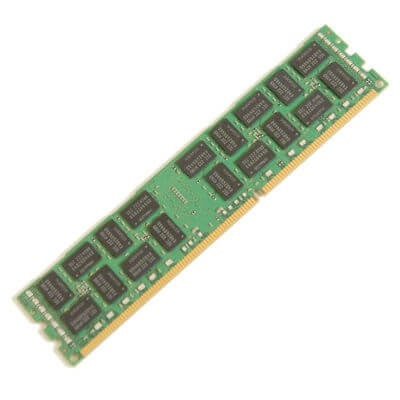
The Dell PowerEdge R740 Server has a total of 24 DIMM slots which makes this system great in terms of scalability. There are 8 memory channels. Each memory channel consists of 8 DIMM slots.
Memory Types & Module Capacities
This system accepts DDR4 memory. ECC Registered (RDIMMs), Load Reduced (LRDIMMs), and Intel Optane DC Persistent Memory (DCPMM) can be used with the R740, but you cannot mix these two types. Capacities of 8GB, 16GB, 32GB, 64GB, and 128GB, 256GB, and 512GB. 128GB is only available with LRDIMMs and 256GB and 512GB are only available with DCPMM. With Load Reduced and Intel Optane, you can achieve an overall greater RAM capacity.
Max Configurations
With ECC Registered memory, you can achieve a max of 1.5TB with a configuration of 24x64GB modules. With Load Reduced, the max you can achieve is 3TB with a configuration of 24x128GB modules. With Intel Optane alone, 6.14TB can be achieved with 12x512GB modules.
Supported Memory Speeds
The Dell R740 supports memory speeds of 2133MT/s, 2400MT/s, 2666MT/s, 2933MT/s, and 3200MT/s. The processor you have installed will determine the max memory speed that you can use with your system. For example, if your processor supports a max memory speed off 2666MT/s and you install a 2933MT/s module, the module will clock down to 2666MT/s. 2933MT/s is the fastest possible speed for this system.
Storage
Supported Drives (2.5")
| Type | Speeds | Max Capacity (Per Drive) |
|---|---|---|
| SAS | 7.2K, 10K, 15K | 2.4TB |
| SATA | 7.2K | 2TB |
| SSD | 6Gb/s, 12Gb/s | 7.68TB |
Supported Drives (3.5")
| Type | Speeds | Max Capacity (Per Drive) |
|---|---|---|
| SAS | 7.2K | 18TB |
| SATA | 7.2K | 16TB |
| SSD | 6Gb/s, 12Gb/s | 7.68TB |
Power Supplies
How Many Power Supplies does the R740 Take?
The PowerEdge R740 server can hold up to two hot-swap power supplies. Hot swap means that power supplies can be install/removed as long as one power supply remains plugged in.
Power Supply Options
Power supply options for the R740 include:
- 495W AC Platinum
- 750W AC Platinum
- 1100W AC Platinum
- 1600W AC Platinum
- 2000W AC Platinum
- 2400W AC Platinum
- 750W AC Titanium
- 1100W DC
- 750W DC Platinum Mixed Mode (China Only)
- 750W AC Platinum Mixed Mode
- 750W HVDC Mixed Mode
- 1100W HVDC Mixed Mode
RAID Options
| RAID Options | RAID Levels | Cache | Drive Speeds | PCIe Generation | RAID Hardware |
|---|---|---|---|---|---|
| S140 onboard software | 0,1,5,10 | None | 6 Gb/s SATA/NVMe | N/A | Software |
| HBA330 | Passthrough | None | 6 Gb/s SAS/SATA 12 Gb/s SAS |
PCIe 3.0 | Hardware |
| HBA350i | Passthrough | None | 3 Gb/s SAS/SATA 6 Gb/s SAS/SATA 12 Gb/s SAS |
PCIe 4.0 | Hardware |
| HBA355e | Passthrough | None | 3 Gb/s SAS/SATA 6 Gb/s SAS/SATA 12 Gb/s SAS |
PCIe 4.0 | Hardware |
| 12Gbps SAS Ext. HBA | Passthrough | None | 12 Gb/s SAS | PCIe 3.0 | Hardware |
| H330 | 0, 1, 5, 10, 50 | None | 6 Gb/s SATA 12 Gb/s SAS |
PCIe 3.0 | Hardware |
| H350 | 0, 1, 10 | None | 6 Gb/s SATA 12 Gb/s SAS |
PCIe 4.0 | Hardware |
| H730P | 0, 1, 5, 6, 10, 50, 60 | 2 GB NV | 6 Gb/s SATA 12 Gb/s SAS |
PCIe 3.0 | Hardware |
| H740P | 0, 1, 5, 6, 10, 50, 60 | 8 GB NV | 6 Gb/s SATA 12 Gb/s SAS |
PCIe 3.1 | Hardware |
| H750 | 0, 1, 5, 6, 10, 50, 60 | 8 GB NV | 3 Gb/s SAS/SATA 6 Gb/s SAS/SATA 12 Gb/s SAS |
PCIe 4.0 | Hardware |
| H840 | 0, 1, 5, 6, 10, 50, 60 | 8 GB NV | 6 Gb/s SATA 12 Gb/s SAS |
PCIe 3.1 | Hardware |
Network Interface Card Options
Daughter Cards
| Broadcom 5720 Quad Port 4x1GbE RJ45 |
| Broadcom 5720/57412 Quad Port 2x1GbE RJ45 + 2x10GbE SFP+ |
| Broadcom 57414 Dual Port 2x10/25GbE SFP28 |
| Intel i350/X550 Quad Port 2x1GbE RJ45 + 2x10GbE RJ45 |
| Intel i350/X710 Quad Port 2x1GbE RJ45 + 2x10GbE SFP+ |
| Intel X550 Quad Port 4x10GbE RJ45 |
PCIe Cards
| Broadcom 5719 Quad Port 4x1GbE RJ45 Low Profile |
| Broadcom 5719 Quad Port 4x1GbE RJ45 Full Height |
| Broadcom 5720 Dual Port 2x1GbE RJ45 Low Profile |
| Broadcom 5720 Dual Port 2x1GbE RJ45 Full Height |
| Broadcom 57412 Dual Port 2x10GbE SFP+ Low Profile |
| Broadcom 57412 Dual Port 2x10GbE SFP+ Full Height |
| Broadcom 57414 Dual Port 2x10/25GbE SFP28 Low Profile |
| Broadcom 57414 Dual Port 2x10/25GbE SFP28 Full Height |
| Broadcom 57416 Dual Port 2x10GbE RJ45 Low Profile |
| Broadcom 57416 Dual Port 2x10GbE RJ45 Full Height |
| Intel X550 Dual Port 2x10GbE RJ45 Low Profile |
| Intel X710 Dual Port 2x10GbE SFP+ Full Height |
| Intel XL710 Dual Port 2x40GbE QSFP+ Full Height |
| Intel E810-XXV Dual Port 2x10/25GbE SFP28 Low Profile |
| Emulex LPE 35002 Dual Port 2x32Gb FC HBA Low Profile |
| Emulex LPE 35002 Dual Port 2x32Gb FC HBA Full Height |
| QLogic 2690 Single Port 1x16Gb FC HBA Low Profile V2 |
| QLogic 2690 Single Port 1x16Gb FC HBA Full Height V2 |
| QLogic 2692 Dual Port 2x16Gb FC HBA Low Profile V2 |
| QLogic 2692 Dual Port 2x16Gb FC HBA Full Height V2 |
| QLogic 2772 Dual Port 2x32Gb FC HBA Low Profile V2 |
| QLogic 2772 Dual Port 2x32Gb FC HBA Full Height V2 |
Systems Management Solutions
The Dell PowerEdge R740 Server utilizes the Integrated Dell Remote Access Controller 9 (iDRAC9), which allows you to easily manage your Dell server. The iDRAC9 web interface provides a variety of useful information and features, that make managing your Dell server an easy task. Features include, but are not limited to hardware monitoring, power control, remote console, control over system settings, firmware update control, storage management, and much more. You can access the iDRAC9 web interface, by setting the iDRAC IP in system setup, and searching the IP in a web browser.
Supported Operating Systems:
The PowerEdge R740 supports a wide variety of operating systems which ranges from different distributions of Linux, VMware, and Windows Server. These operating systems include, but are not limited to:
- ⦿ Citrix XenServer 7.1
- ⦿ Red Hat® Enterprise Linux 6
- ⦿ Red Hat® Enterprise Linux 7
- ⦿ Red Hat® Enterprise Linux 8
- ⦿ Red Hat® Enterprise Linux 9
- ⦿ SUSE Linux ES 12
- ⦿ SUSE Linux ES 15
- ⦿ Ubuntu Server 16.04 LTS
- ⦿ Ubuntu Server 18.04
- ⦿ Ubuntu Server 18.04 LTS
- ⦿ Ubuntu Server 20.04 LTS
- ⦿ Ubuntu Server 22.04 LTS
- ⦿ VMware ESXi 6.0
- ⦿ VMware ESXi 6.5
- ⦿ VMware ESXi 6.7
- ⦿ VMware ESXi 7.0
- ⦿ VMware ESXi 8.0
- ⦿ Window Server 2012 R2
- ⦿ Window Server 2016
- ⦿ Window Server 2019
- ⦿ Window Server 2022 LTSC
Technical Information
Technical Information Overview
The Dell PowerEdge R740 is a powerful 1U rackmount server, that can handle almost anything you throw at it. It is loaded with features that expand the capabilities of the system. Learning about these features is the best thing you can do to fully take advantage of the perks of the R740. We have compiled a few guides that are useful for learning the ins and outs of the Dell PowerEdge R740 server.
Technical Guide
Learn the ins and outs of the R740: View PowerEdge R740 Technical Guide
Technical Specifications
For all technical information regarding the PowerEdge R740, refer to the R740 technical specifications: View PowerEdge R740 Technical Specifications
Spec Sheet
Need a quick overview of the R740's specs? Check out the R740 spec sheet: View PowerEdge R740 Spec Sheet
Installation and Service Manual
Need help installing/replacing components or with using diagnostic's tools? The Installation and Service Manual is a fantastic resource: View PowerEdge R740 Installation and Service Manual
Integrated Dell Remote Access Controller 9 User's Guide
Everything you need to know about iDRAC9, all in one place: View PowerEdge R740 iDRAC9 User's Guide
Lifecycle Controller User's Guide
Navigate Lifecycle Controller with the Lifecycle Controller User's Guide: View PowerEdge R740 Lifecycle Controller Setup Guide
Dell Systems Management Overview
Learn about the R740's System Management Technologies: View PowerEdge R740 Dell System Management Overview Guide
BIOS Upgrade EFI File Download
Upgrade your BIOS Via an EFI File: Download PowerEdge R740 BIOS Upgrade EFI File
Cloud Ninjas' Videos for Dell PowerEdge R740 Server
- CPUs
- Memory
- Drives
- NVMe
- Different Chassis Types
- RAID
- BIOS
- iDRAC
- Mass Updates
- How to set IP Address
- How to install VMware ESXI 7.0.3
- Network Cards
- Power Supplies
- How to Rack
- How to Install Windows Server 2019
CPUs
Memory
Drives
NVMe
Coming Soon
Different Chassis Types
Coming Soon
RAID
BIOS
Coming Soon
iDRAC
Mass Updates
How to set IP Address
How to install VMware ESXI 7.0.3
Coming Soon
Network Cards
Coming Soon
Power Supplies
How to Rack
How to Install Windows Server 2019
Customer's Comments and Reviews
- Choosing a selection results in a full page refresh.
- Press the space key then arrow keys to make a selection.